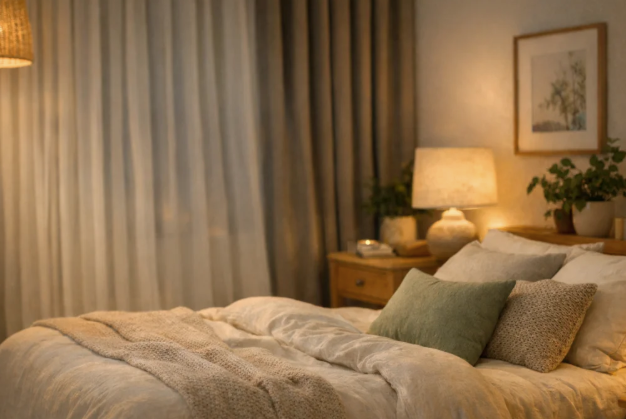
A calm, sleep-friendly bedroom starts with a practical lighting plan and soft, glare-free illumination. Layer warm, dimmable tones and curb blue light after evening hours. Quiet the space with simple soundproofing and clean ventilation, ensuring breathable air. Balance temperature with cozy textures and calming colors, while minimizing clutter. A few weekend upgrades—fresh linens, refreshed lighting, mindful decluttering—can transform the room into a restful sanctuary that invites a closer look, should you want to optimize rest further.
How to Create a Sleep-Friendly Lighting Plan
A sleep-friendly lighting plan begins with understanding how illumination affects circadian rhythm and wakefulness.
Functional, stylish choices empower freedom: soft lighting diffuses glare, circadian rhythms align with natural cycles, and dimming options tailor ambiance.
Blue light exposure is minimized after evening hours, supporting rest.
Strategic layering, warm hues, and adjustable controls create calm environments without sacrificing practicality or style.
Sound and Air: Quieting Your Bedroom for Rest
Effective bedroom quiet begins with deliberate sound management and clean, breathable air. The room embraces soundproofing strategies to minimize external intrusion while preserving balance. Air quality improvements emphasize filtered ventilation and reduced pollutants, ensuring a calm atmosphere. A sleek combination of acoustical panels and thoughtful layout supports restful stillness, enabling freedom-loving occupants to sleep deeply without distraction.
Temperature, Texture, and Color for Calm Sleep
Temperature, texture, and color work together to cue calm sleep by shaping comfort, tactile certainty, and a subdued visual mood.
The approach emphasizes temperature balance to prevent heat or chill, texture cues that invite soft touch without distraction, and color psychology that leans toward calming hues.
This creates a practical, stylish, freedom-friendly environment conducive to restorative rest.
Simple Weekend Upgrades That Make a Difference
Small weekend upgrades can yield noticeable benefits without a full remodel, turning the bedroom into a calmer, more sleep-friendly space with minimal effort. Simple weekend tweaks provide tangible efficiency: declutter surfaces, refresh linens, and update lighting to create atmosphere. The approach favors freedom and control, pairing practical choices with stylish detail. These upgrades that make a lasting difference align with thoughtful, autonomous living. simple weekend upgrades that make.
See also: Blockchain-Powered Financial Technology
Frequently Asked Questions
What Bedtime Routine Improves Sleep Quality the Most?
A consistent bedtime routine improves sleep quality the most. It includes dim lighting, screen-free wind-down, gentle stretching, and a regular bedtime. This functional, stylish practice supports a sense of freedom while optimizing restorative, uninterrupted sleep quality.
Do Plants in the Bedroom Affect Sleep?
Plants in the bedroom can influence sleep by affecting air quality; their health directly impacts this benefit. They purify air, add ambiance, and enhance a sense of freedom, while careful placement avoids nighttime oxygen fluctuations and allergens.
How Does Caffeine Timing Impact Sleep at Night?
Caffeine timing subtly shifts nightly rhythms; it lengthens sleep latency if consumed late. With mindful caffeine metabolism, one might enjoy daytime alertness while preserving restorative rest, balancing energy and freedom through cautious dosing and respectful sleep scheduling.
Can a Mirror Placement Disrupt Sleep?
Yes, mirror placement can contribute to sleep disruption. Aesthetically functional, the placement of reflective surfaces influences light, movement, and perceived room size, potentially activating the mind at night and interrupting restful cycles for some sleepers seeking freedom.
Is There a Role for Aromatherapy in Sleep Health?
Aromatherapy offers some sleep benefits; a well-controlled approach mirrors calming tides. Aroma safety and essential oil diffusion practices matter, ensuring safe concentration, ventilation, and avoidance of irritants. It supports freedom-minded routines when used with caution and restraint.
Conclusion
A sleep sanctuary is crafted, not rushed, by lighting that breathes after dusk and air that feels fresh as dawn. The plan glides in: warm, dimmable glow; quiet corners that hush the day; textures that cradle the skin; colors that whisper rather than shout. Weekend tweaks become rituals, decluttering into clarity. In this quiet architecture, rest arrives like a steady tide, stylish and practical, renewing mind and body with every tranquil breath.
